Case study4 min read·April 2, 2026
The Bird, The Bat, and a Century of Brand Equity
Seeing a kookaburra in the wild and tracing the commercial life of its name back to 1913 highlights the intersection between nature, culture, and commerce.


I saw a kookaburra up close today, and my first thought was not the bird. It was the cricket bat.
It was perched calmly on a branch, completely unbothered. Its call is one of the most recognisable sounds in Australia, often described as laughter echoing through the bush. Seeing it at that proximity made me pause, not just because of how striking it looked, but because of what the name “Kookaburra” represents beyond nature.
In commerce, “Kookaburra” is synonymous with cricket.
For anyone who has played the game in Australia or followed it internationally, Kookaburra Sport is a name that carries weight. The brand is known for its cricket balls and bats, and it has been used in international matches for decades, including Test cricket. The red Kookaburra ball is instantly recognisable to players and fans alike.
That moment led me to look into the origins of the name from a trade marks perspective.
The KOOKABURRA trade mark was filed on 9 April 1913. View the trade mark on IP Australia
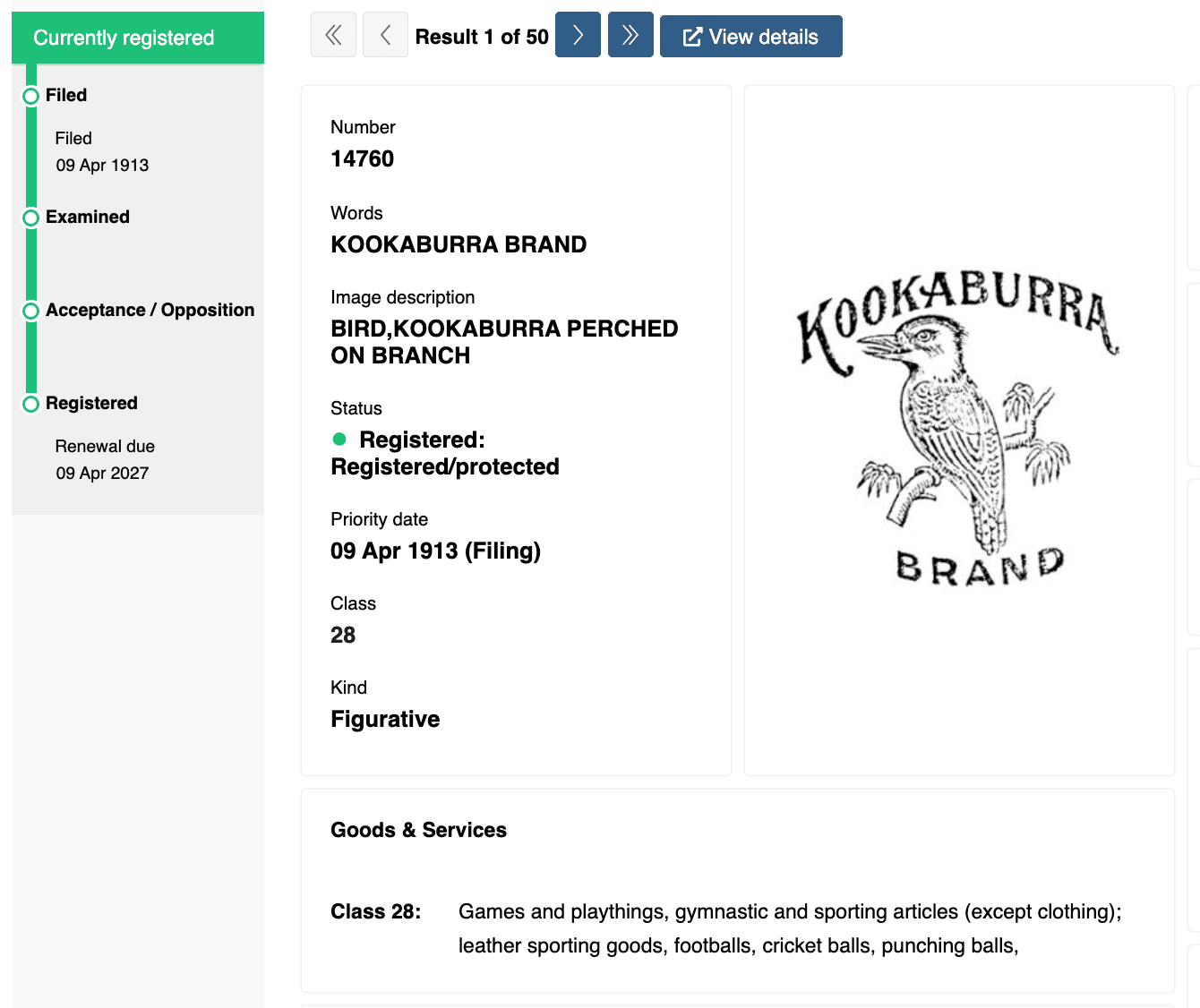
That is more than a century ago, at a time when Australia itself was still relatively young as a federated nation, having only federated in 1901. It was also a period before World War I, before global supply chains, and long before modern sports branding and sponsorships became sophisticated commercial industries.
The company behind the brand, founded by Alfred Grace in Melbourne, began as a small sporting goods manufacturer. Over time, it grew into one of the most recognisable names in cricket, supplying equipment used at the highest levels of the game. Today, Kookaburra balls are used in Test matches across countries such as Australia, New Zealand, and South Africa.
What stands out is not just the longevity of the brand, but the choice of the name itself.
The kookaburra is native to Australia. It is distinctive, memorable, and culturally embedded. By choosing that name, the brand anchored itself to something uniquely Australian. It was not abstract or invented. It was real, familiar, and immediately identifiable.
That decision, combined with early trade mark protection, created the foundation for long term brand equity.
Trade marks are often misunderstood as purely legal tools. In reality, they are commercial assets that accumulate value over time. Every product sold, every match played, and every consumer interaction adds another layer of goodwill to the name.
Over decades, that goodwill compounds.
In the case of Kookaburra, the brand has moved through generations. From local cricket clubs to international stadiums, from junior players picking up a bat for the first time to elite athletes competing on the world stage. The name has remained constant, even as the game and the business around it have evolved.
There is also a broader lesson here for businesses.
A strong brand name does more than distinguish one business from another. It carries meaning. It creates an emotional and cultural connection. When done well, it becomes shorthand for quality, reliability, and experience.
Choosing a name linked to something authentic, whether that is place, culture, or identity, can significantly strengthen that connection. It gives the brand depth and staying power.
However, choosing the right name is only part of the equation.
Protecting it is what ensures that value is retained.
Without trade mark protection, a brand is exposed. It becomes vulnerable to imitation, dilution, and loss of distinctiveness. With protection, it becomes an asset that can be licensed, enforced, and built upon.
Seeing a kookaburra in the wild and then tracing the commercial life of its name back to 1913 highlights the intersection between nature, culture, and commerce.
One exists in the natural world. The other in the marketplace.
Both are instantly recognisable. Both carry meaning.
If you are building a brand, there is something to take from that.
Think carefully about the name you choose. Consider what it represents and how it will be perceived over time. Then take the necessary steps to protect it properly.
Because the real value of a trade mark is not in the filing itself. It is in what that filing allows you to build over the decades that follow.

Syed Mosawi
Founder & Registered Trade Marks Attorney. Helping Australian businesses protect their greatest asset.
Start your free search